
Asia Credit’s structural shift: What’s powering the market’s evolution

By Cathy Cai | 5 February 2026
Text
Trader's Table event recap: MarketAxess hosted a Trader's Table in Hong Kong on Asia credit, in partnership with Barclays that brought together a diverse group of buy-side traders and portfolio managers for a dynamic exchange on Asia’s rapidly evolving credit landscape throughout 2025. Insights exchanged from the session reflected a market not merely cycling through phases, but undergoing a genuine change driven by liquidity shifts, accelerating technology adoption, and changing dealer-client behavior.
The discussion flowed naturally from the healthy recovery seen in Asia credit, to broader themes including liquidity improvements, execution priorities, protocol innovations, dealer strategy and automation roadmaps, as well as the role of MarketAxess’ data in empowering client trading decisions.
Asia Credit sees healthy recovery and diversification
Asia USD credit volumes have traced a distinct cycle over the past five years: a post-COVID surge in 2021, a slowdown in 2022–2023, and a healthy recovery underway in 2024–2025. This recovery is supported by resilient macro fundamentals and a robust primary market. In terms of sectors, the banking and finance segment remains dominant, increasing from 31% in 2023 to 34% in 2025. Hotels and restaurants are seeing steady growth, while real estate continues to face headwinds, with declining volumes due to regulatory pressure and weaker sentiment.
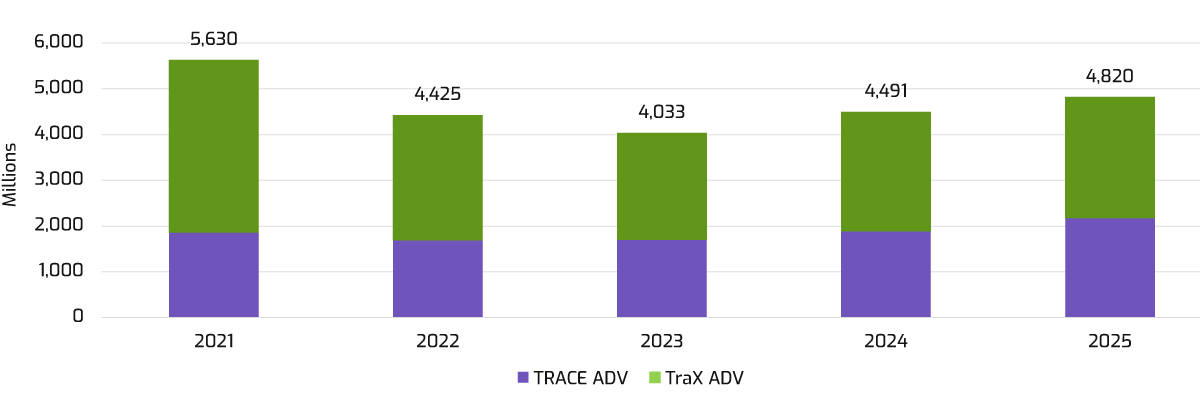
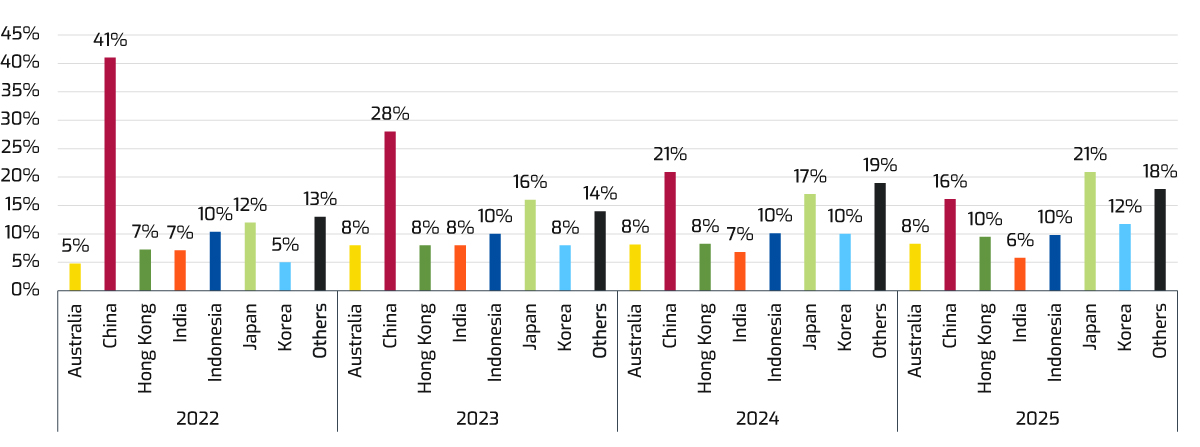
Looking regionally, TraX® and TRACE data have reflected that a meaningful diversification has been playing out since 2022. While China credits’ share of secondary trading has declined, activity has grown notably in South Korea, Japan, and Australia credits, driven by strong issuance and attractive premiums. Trading data has shown that the inclusion of Australia and Japan has more than doubled overall APAC credit trading volumes and are partially traded during US hours, as seen in the comparison between Chart A and Chart B below.
Chart A
USD Asia Corps & Sovs TraX & TRACE Average Daily Volume - EX AU/JP
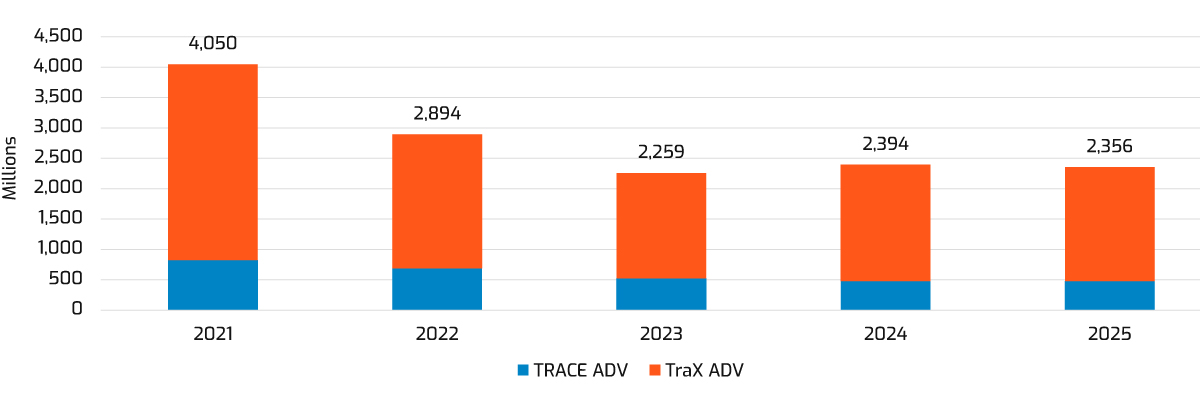
Chart B
USD Asia Corps & Sovs TraX & TRACE Average Daily Volume - INCL. AU/JP
Meanwhile, we observed that trading volume in other APAC credit markets including the Philippines, Singapore, and Malaysia has also grown over the years, reflecting a broader diversification taking place.
TraX Asia volume share dynamics by region
In response to these shifts, market makers have expanded their credit capabilities across Japan, Australia, and South Korea credits, compressing margins and intensifying competition for client flows—especially in liquidity provision.
Liquidity continues to improve in Asia Credit
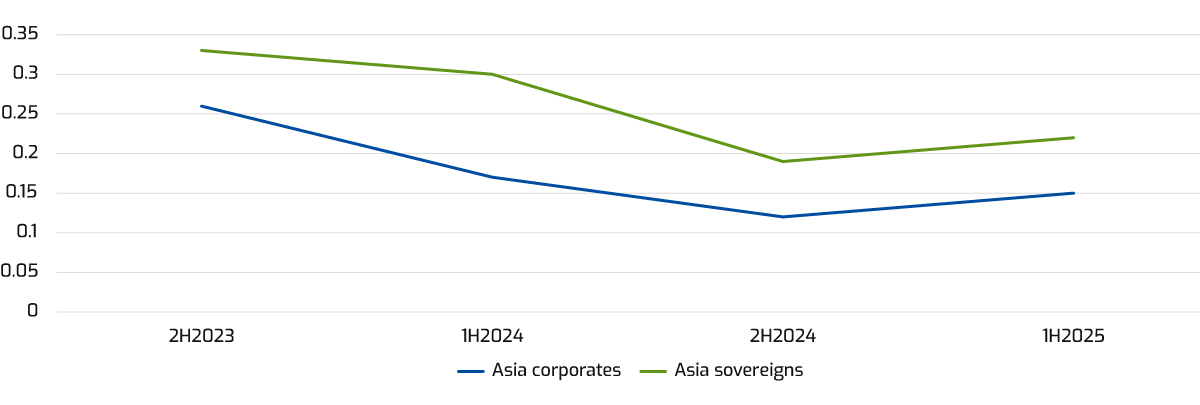
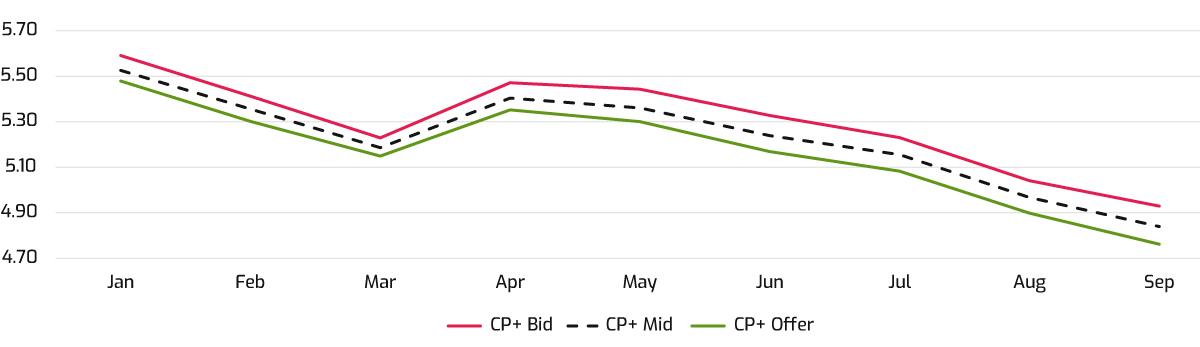
Despite tight spreads and subdued volatility, several indicators point to improving liquidity across Asia credits. Domestic banks - holding ample deposits but facing tepid loan growth have redirected excess funds into USD bonds. This reinforces an overall structural shift toward investment-grade dominance. Meanwhile, MarketAxess data metrics like CP+™ bid/ask spreads and RFQ hit ratios show clear improvement from the second half of 2023 through the first half of 2024. Although a modest widening appeared from late 2024 into the first half of 2025, it likely reflects a more cautious tone or evolving market‑making strategies.
Asia USD IG bid/ask spread: Corps vs Sovs (bps)
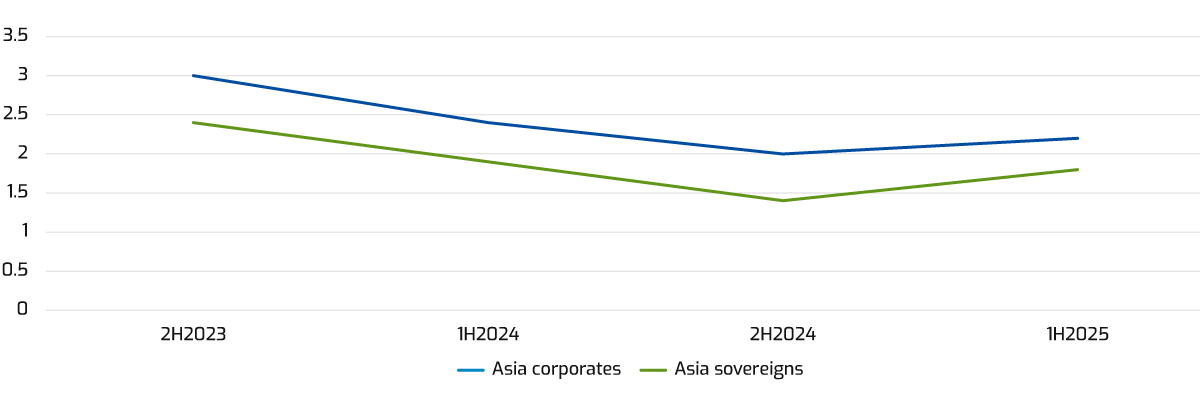
Asia USD IG bid/ask spread: Corps vs Sovs ($)
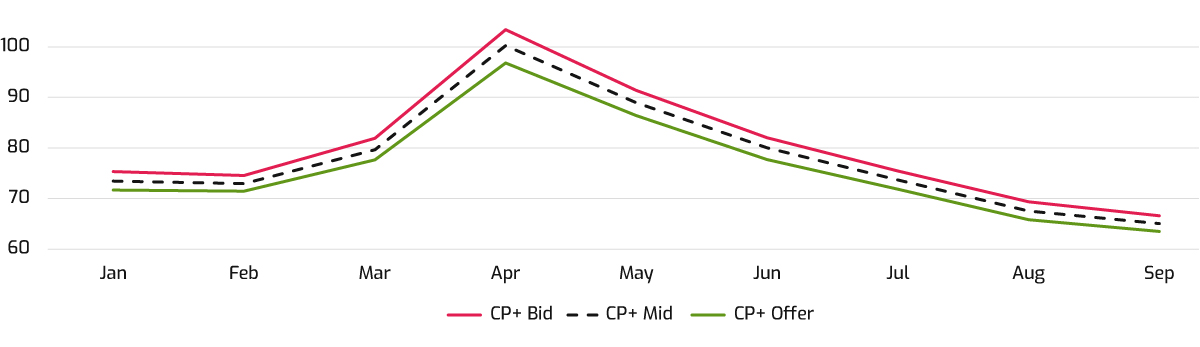
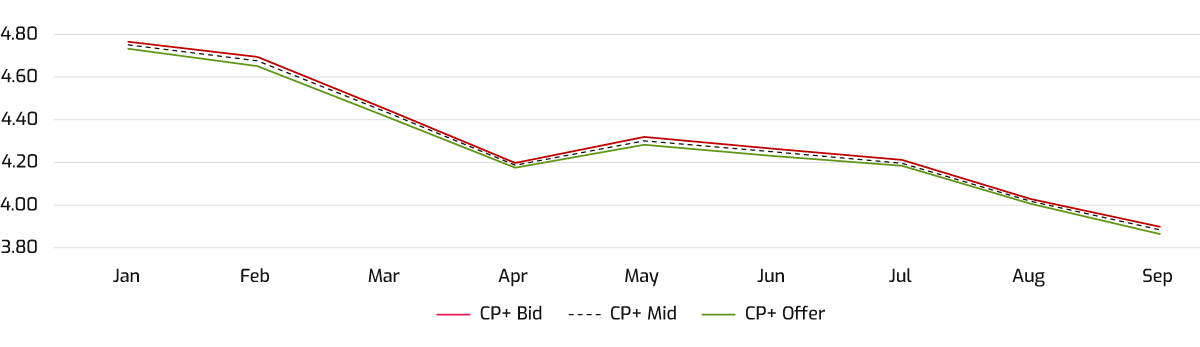
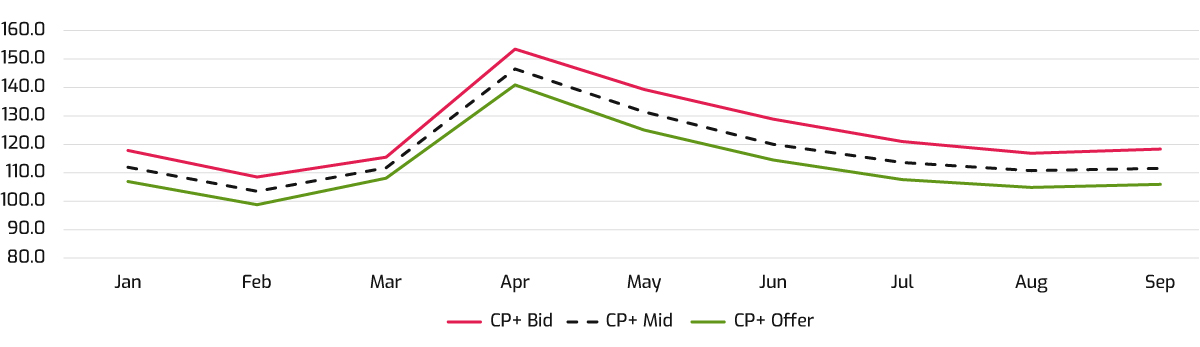
Both Asia Investment Grade and High yield spreads spiked during the 2025 Liberation-Day event but compressed mid-year amid improving macro conditions. Investors - especially these Emerging Market mandates - are flagging increasingly focused on total yield, not just spread levels.
TraX and MarketAxess platform data presented a clear increase in block trading activities, and larger trade sizes attract more dealer responses, partly due to their visibility and self-selection—dealers bid more aggressively for size in liquid names. Market participants broadly agreed that protocols, such as Targeted RFQ (an EM hard currency block trading solution), offer better control over exposure and improve hit rates. Plus, Portfolio trading and ETF flows are improving liquidity in particular illiquid names, signalling a broader shift toward scalable execution models.
CP+ Asia Corps vs Sovs credit spread & bid/ask spread dynamics
2025 YTD Asia USD IG Credit Spread Dynamics (bps)
2025 YTD Asia USD IG YTM Dynamics (%)
2025 YTD Asia USD HY Credit Spread Dynamics (bps)
2025 YTD Asia USD HY YTM Dynamics (%)
Dealer strategy & automation roadmap
Dealer business models are steadily moving from traditional high‑touch approaches toward algorithmic and systematic trading. Electronic platforms are emerging as critical infrastructure, enabling greater transparency and efficiency in price discovery.
A key area of focus is the integration of Asia EM credit trading into centralized global risk books, managed alongside rates and FX through a mix of optimized risk management and differentiated execution channels. Moreover, they are replacing manual pricing for commoditized flows with predictive algorithmic tools that enable faster, more consistent, and data-driven execution. These, coupled with enhanced alignment between research, execution and data analytics, help drive smarter decisions on trading desks.
Holistic data insights for event-driven markets
Recent market events have highlighted the importance of combining real‑time market colour with post‑trade analytics. New World Development’s bonds (NWDEVL) demonstrate a clear example: while TraX provides valuable retrospective data, MarketAxess’ Axess All live prints and instant dealer communication were critical in navigating volatility during the Q2 2025 cycle.
Recent market events have highlighted the importance of combining real‑time market colour with post‑trade analytics. New World Development’s bonds (NWDEVL) demonstrate a clear example: while TraX provides valuable retrospective data, MarketAxess’ Axess All live prints and instant dealer communication were critical in navigating volatility during the Q2 2025 cycle.
The chart below provides a retrospective view of NWDEVL’s trading volume and net skewness during the Q2 2025 volatility cycle – it illustrates how trading patterns evolved.
NWDEVL TraX volumes & net skew: weekly 2025-YTD
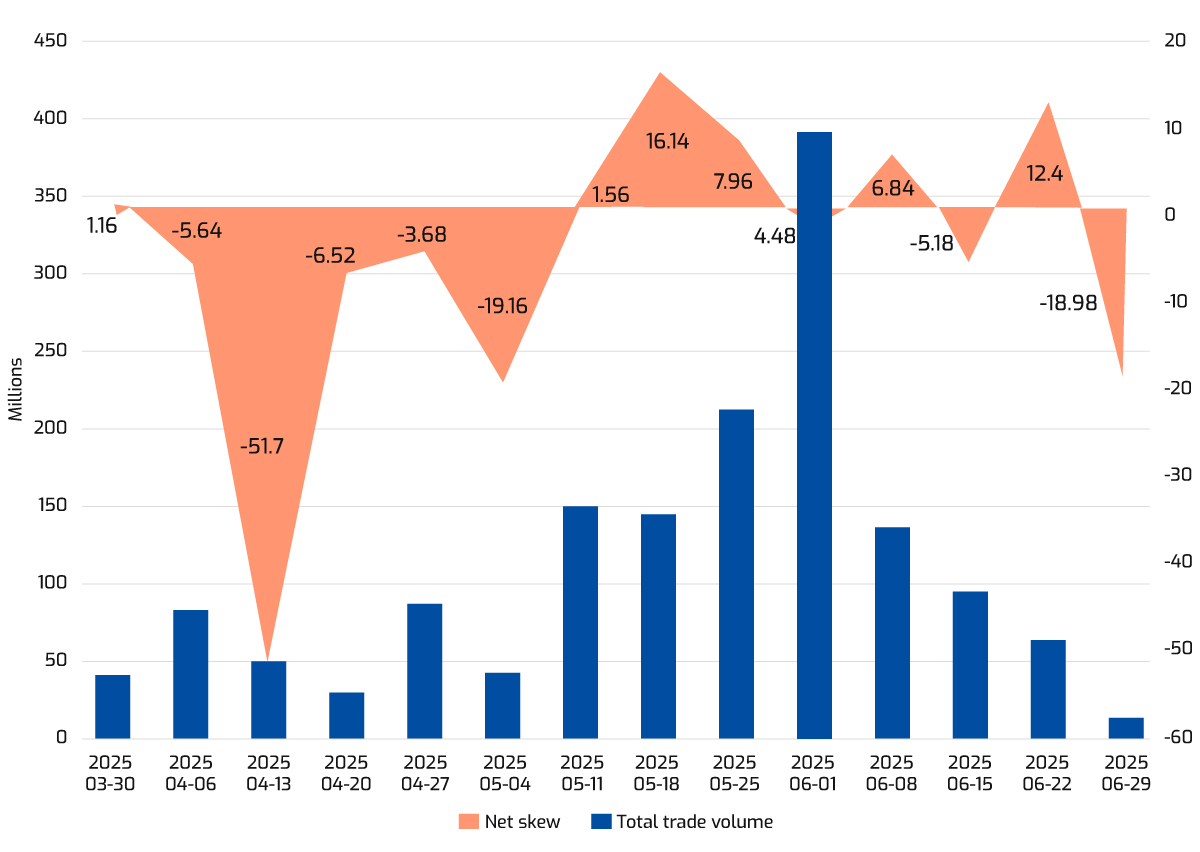
New World Development (NWDEVL) saw strong net selling in April till early May.
Trading volume peaked from the end of May to early June, where loan financing plans were in talks and announced officially.
Volume waned soon after the peak, followed by another net selling session in the end of June.
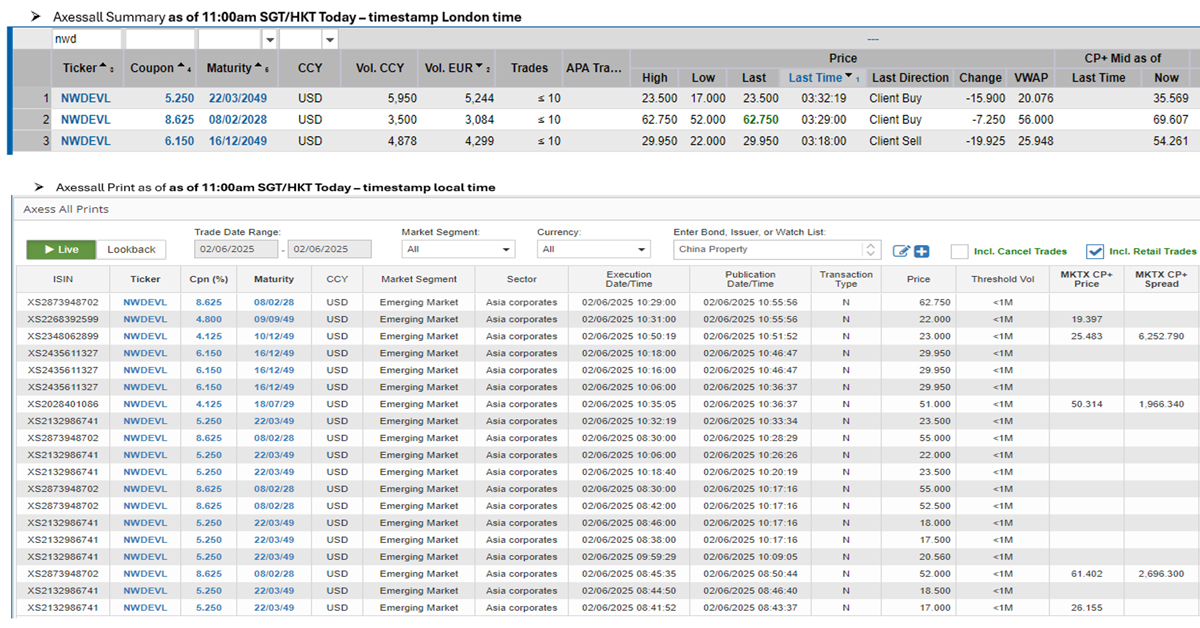
Complementing this, the snapshot below is a real-time screen capture of relatively live data after company news on loan refinancing was released on June 2, indicating the timing and prices of completed transactions in the secondary market while keeping trade counterparties confidential. Gaining insight to both retrospective data and relatively live data enables traders to move with more confidence, resulting in better trade decisions.
New World Live snapshot:
2 June 2025 10:04am BBG news: New World Gets Bank Commitments for 60% of Loan Refinancing.
1st snipping shows the Axess All snapshot as of 11:00am SGT/HKT today
2nd snipping shows the individual traded prices from Axess All PRINTs where the trade size = <USD1M
Gearing up for what’s next in Asia Credit
Looking ahead, participants are monitoring two powerful forces that are shaping fixed income trading: 1) the Fed’s pivot to unlock sidelined capital, and 2) the longer-term structural evolution towards the “equitization” of credit—where trading increasingly mirrors equities in automation, transparency, and data sophistication.
Asia’s credit market is moving beyond its old cycles. Structural change—not short‑term swings—is now the dominant narrative. Firms that invest in technology, data capabilities, and operational agility will be best positioned to thrive in a more sophisticated and automated trading environment.