
AxessPoint: The new era of corporate bond trading for retail investors
Highlights
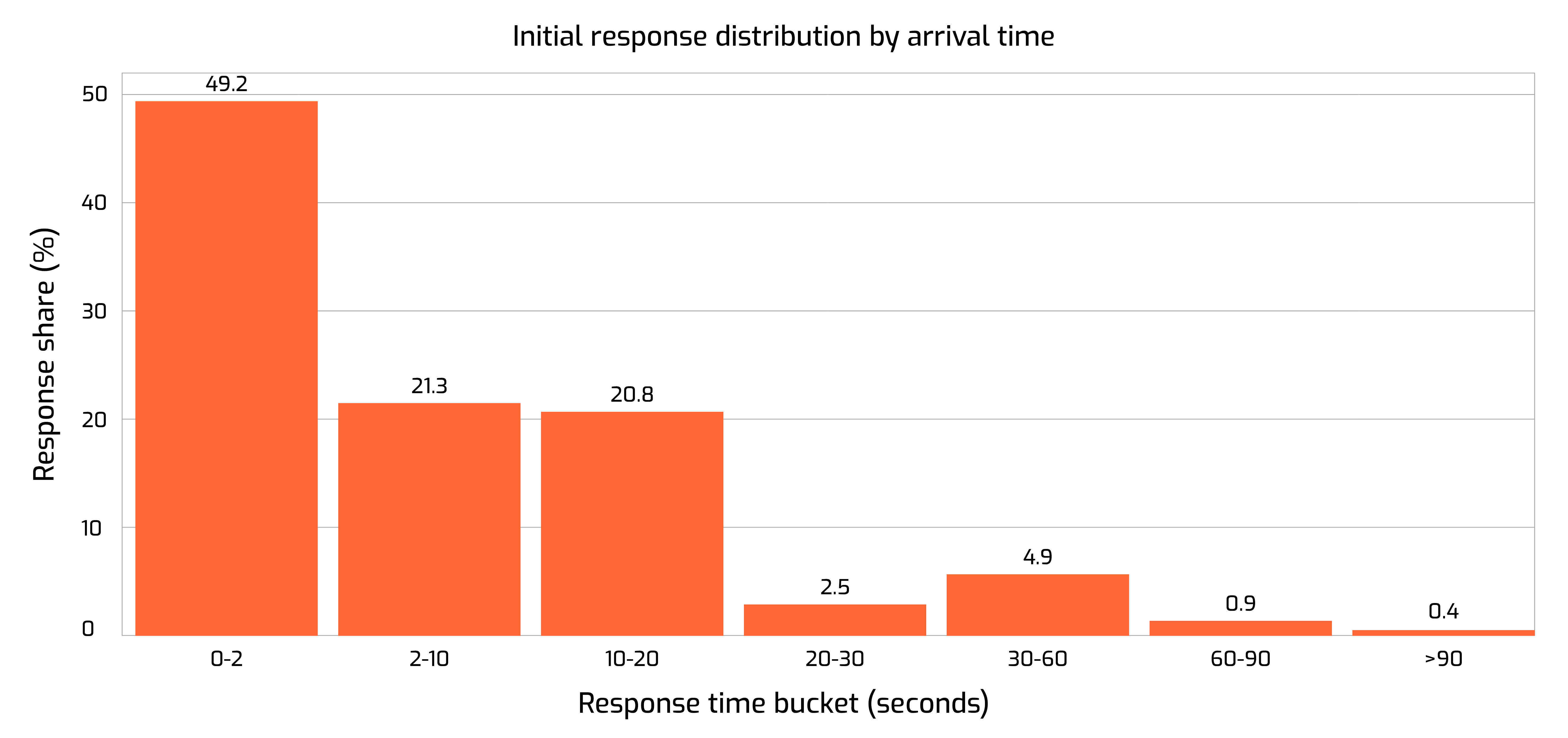
49% of responses arrive within 2 seconds, and the average trade completion time on the USHG ASAP Price protocol is 60 seconds.
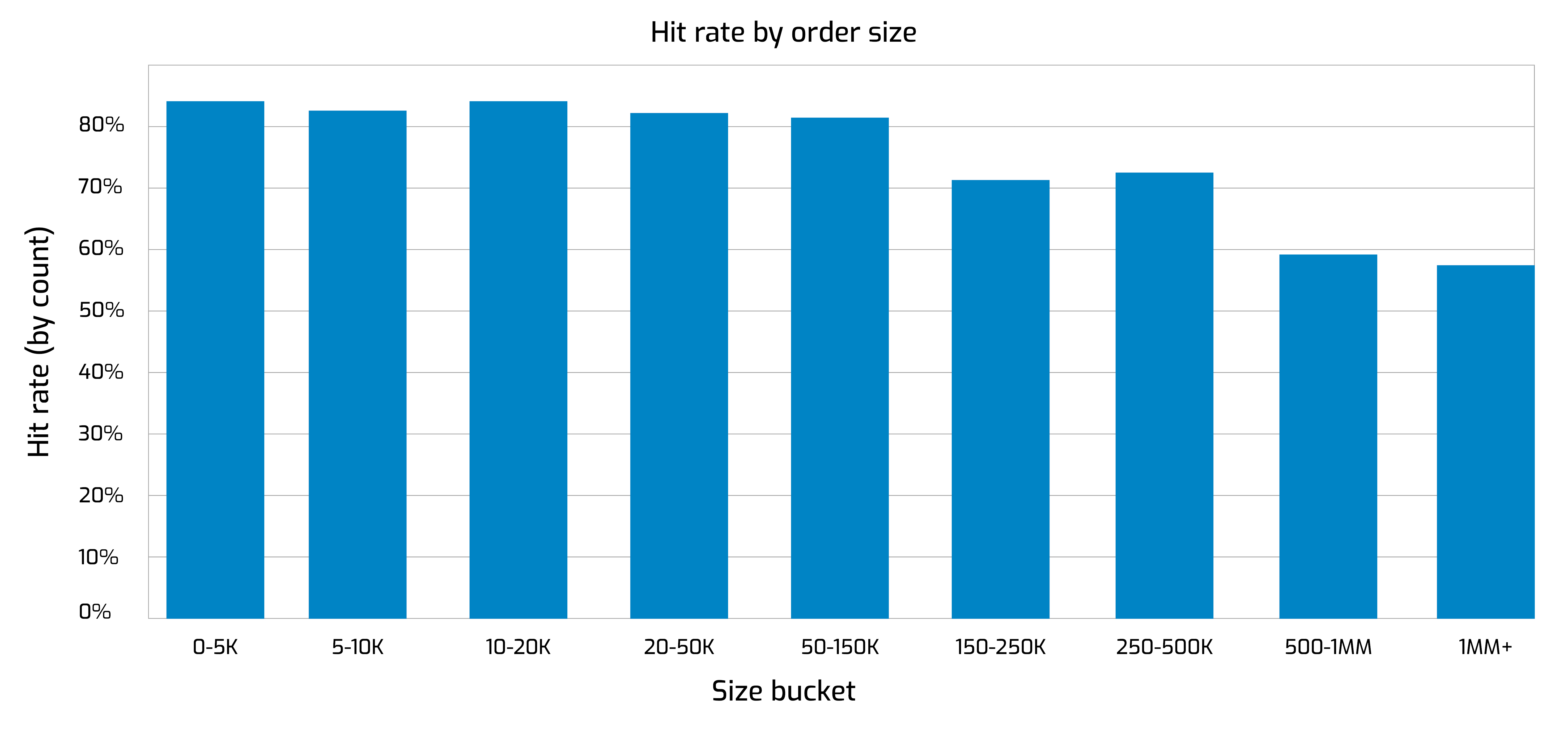
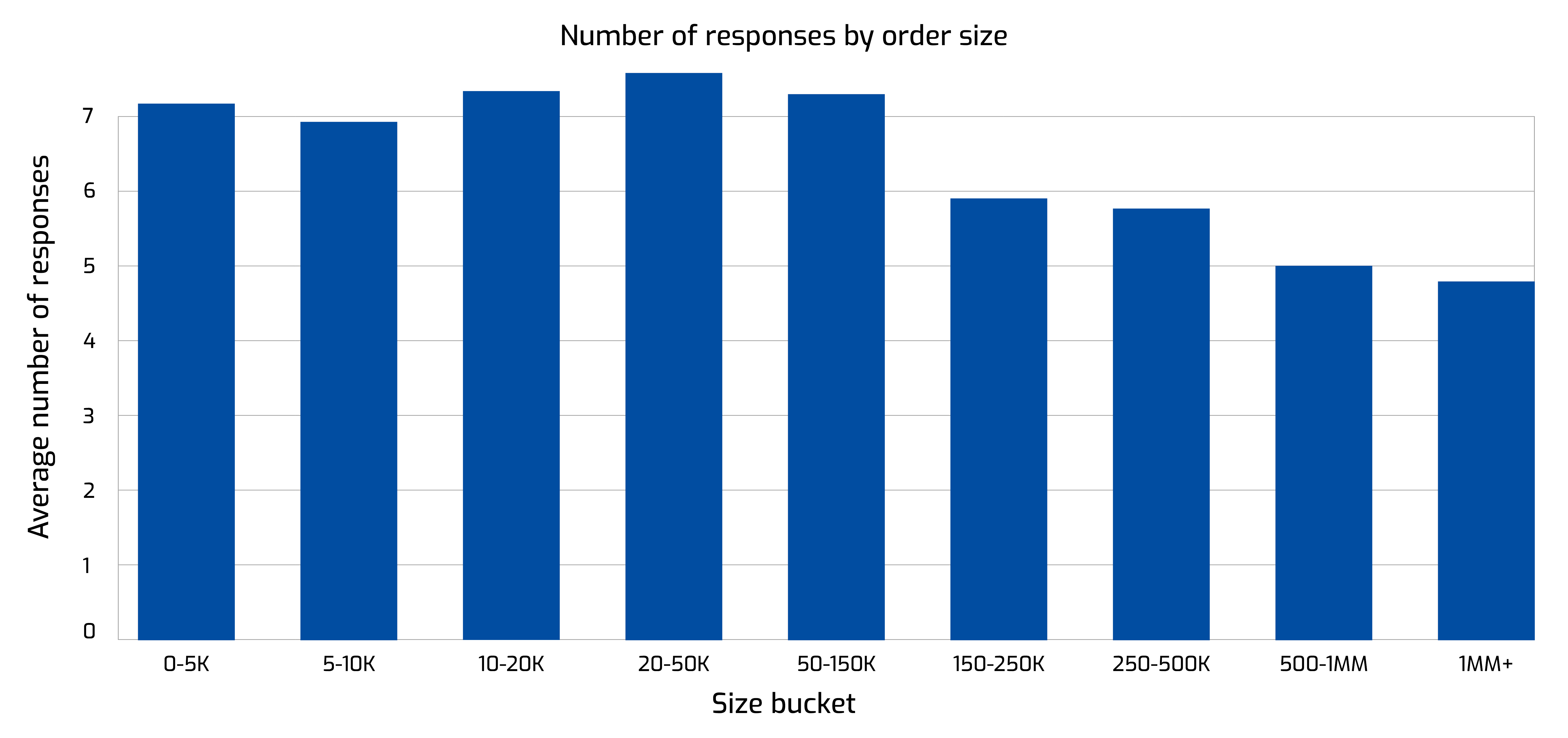
We see 77% hit rate and avg 6.7 responses per inquiry on the platform.
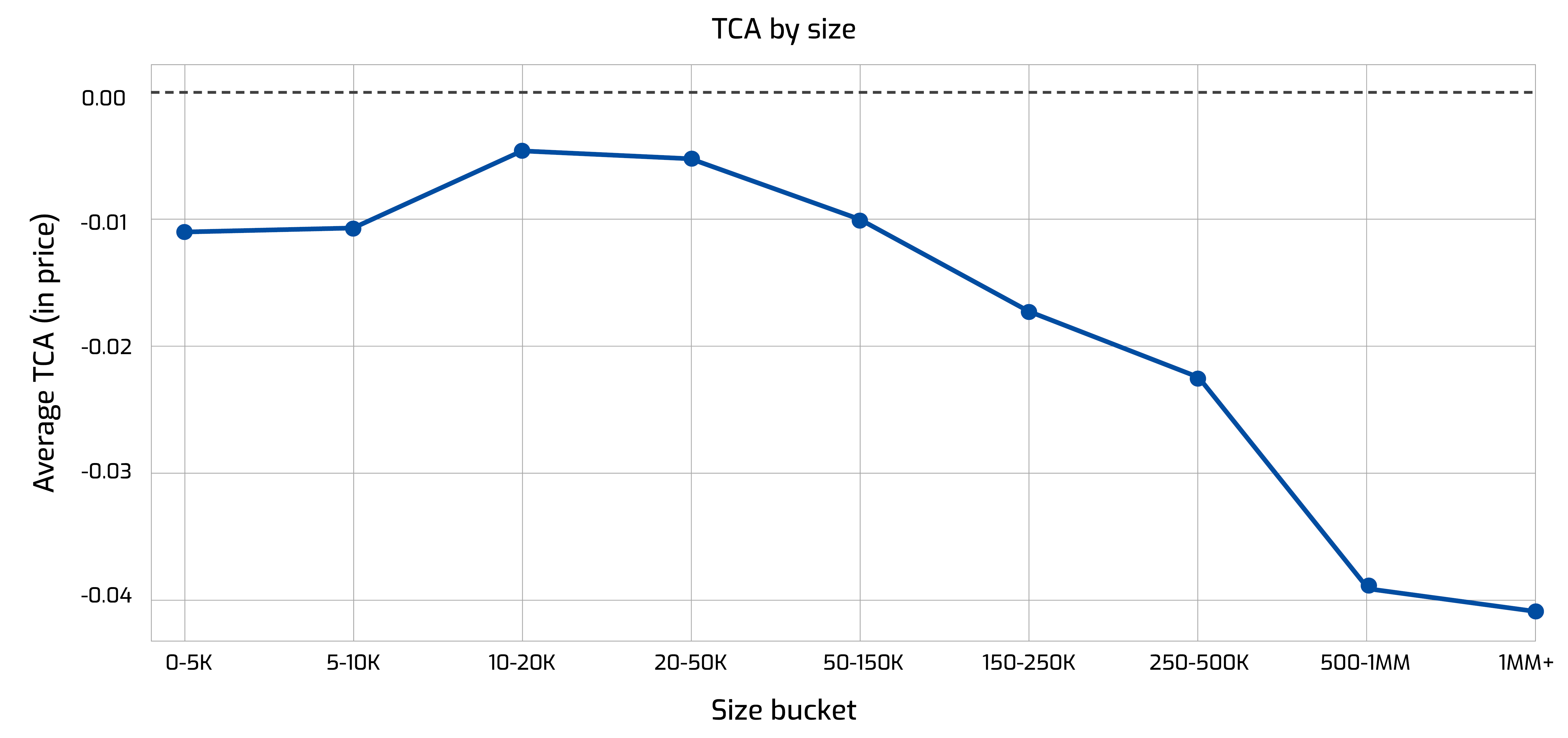
Orders below 150K achieve favorable TCA outcomes, higher hit rates, and receive more responses.
USHG ASAP Price protocol is primarily used by Private Banks and Wealth Management execution desks across various order sizes. We observe strong liquidity and favorable execution outcomes for odd-lot and retail-sized orders within this protocol. Especially smaller orders below 150K benefit from deep liquidity and faster execution—this is a new area of trading efficiency for retail investors.
Platform activity
Data: We use client RFQ data from platform over the period from September 2024 to February 2025 under the USHG ASAP Price protocol.
60% of the orders have sizes below 150K, and 90% are below 500K. On average, we observe a 77% hit rate and receive 6.7 responses per inquiry on the platform. Both metrics tend to decline for orders larger than 150K.
Speed of trading and responses
49.2% of responses arrive within 2 seconds, and 98.7% of responses arrive within 1 minute. For orders below 150K, 92% of responses are received within 20 seconds. Larger orders take longer to receive responses, and we observe a decline in response speed for orders exceeding 150K.
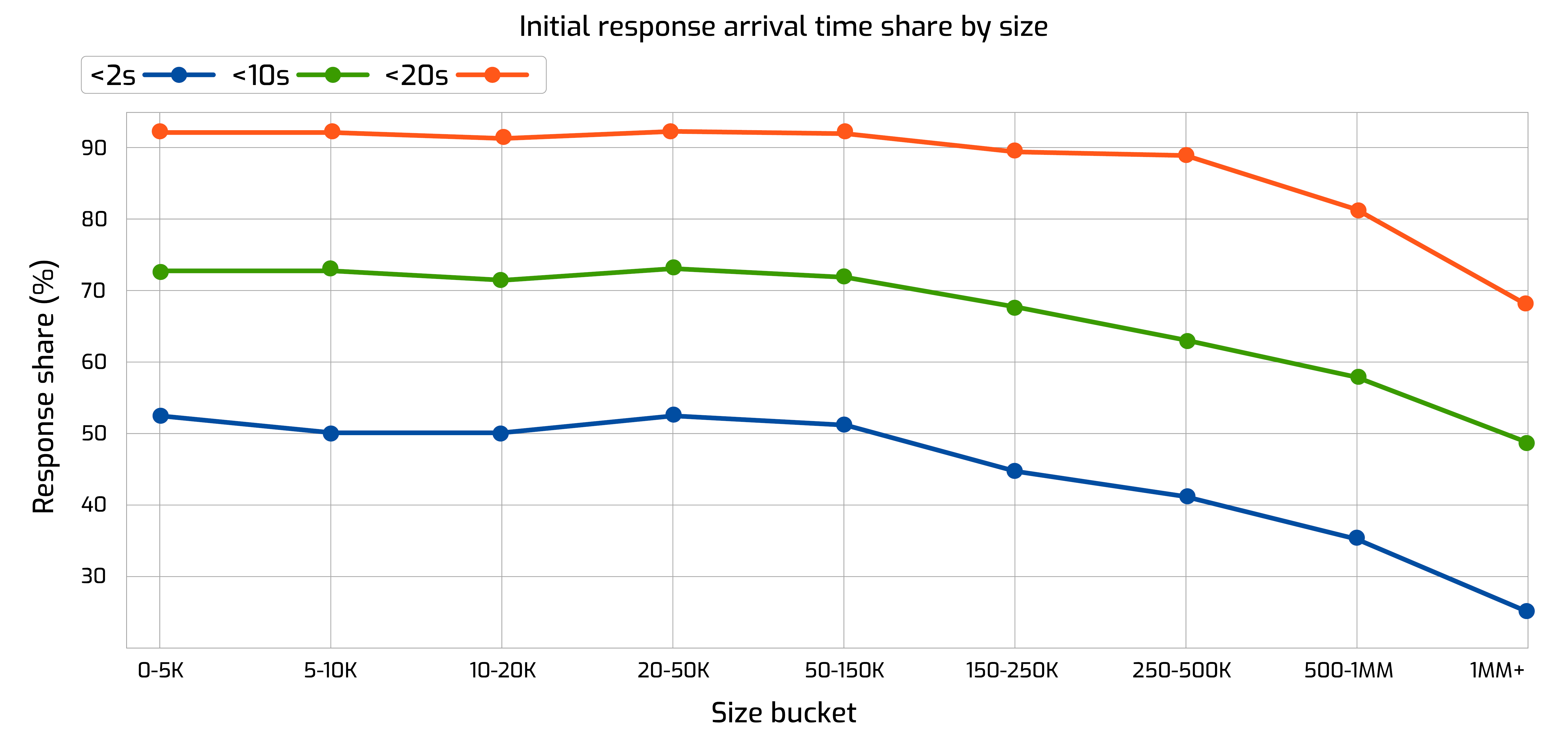
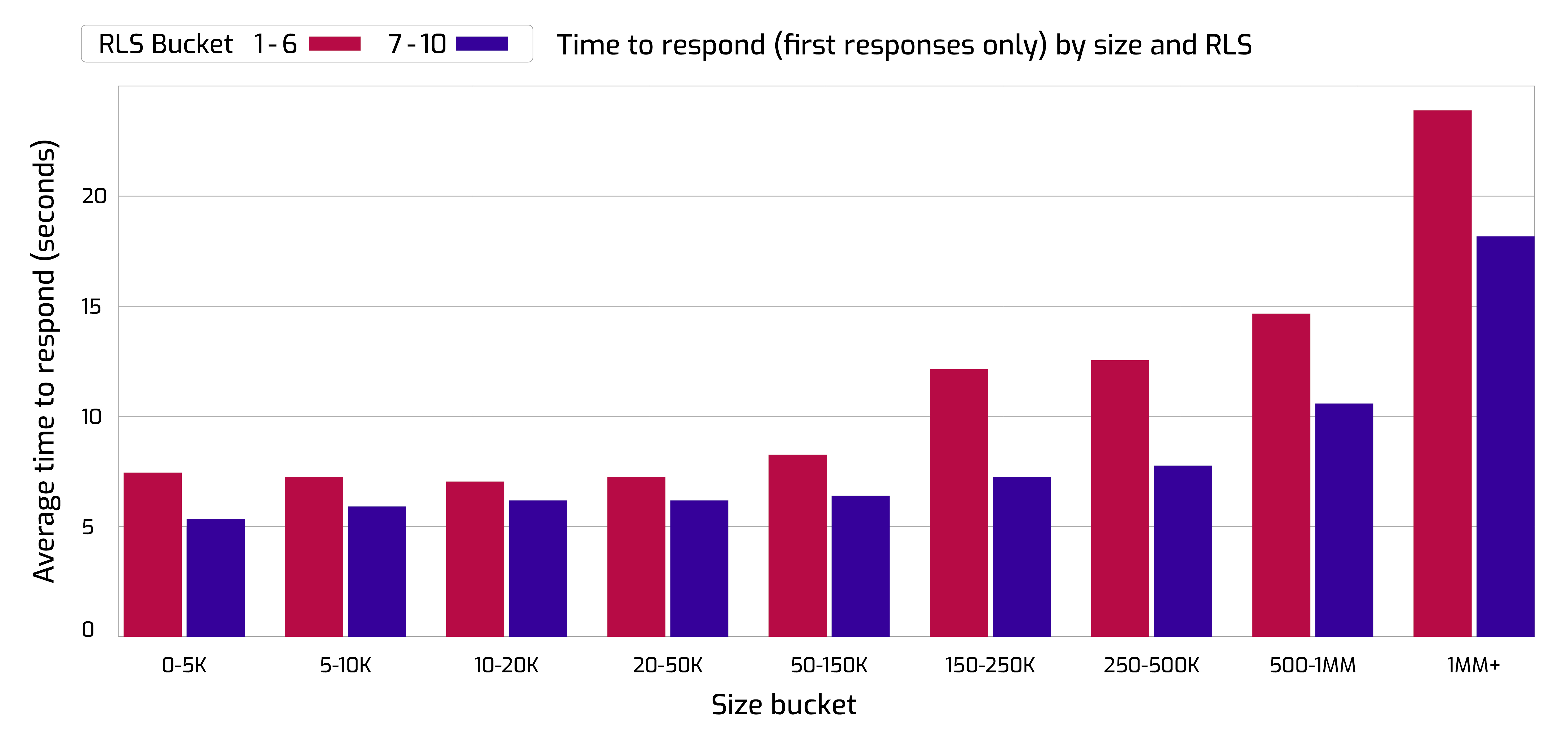
Orders with sizes below 150K execute within a minute, with initial responses arriving in an average of 6 seconds. For orders larger than 150K, both time to trade and response arrival take slightly longer. In both cases, orders involving liquid bonds tend to execute and receive initial responses more quickly. The high speed of responses and trading combined with the availability of highly accurate pricing pre-trade through CP+™ represents opportunities for retail investor to execute quickly and efficiently.
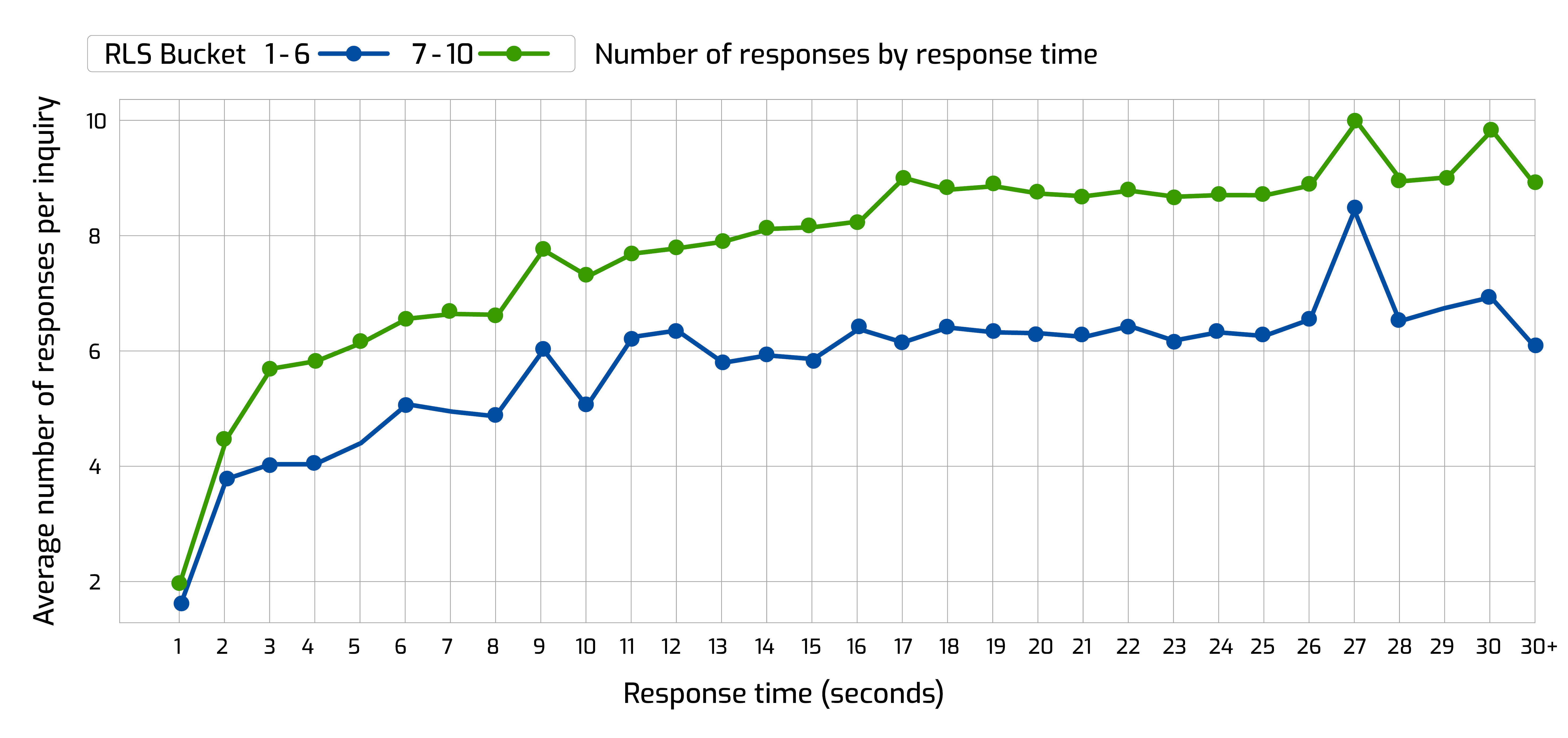
Liquid bonds receive more responses than illiquid ones. The figure below illustrates the response arrivals over time. On average bonds with an RLS 7 or higher receive 7 responses in 10 seconds.
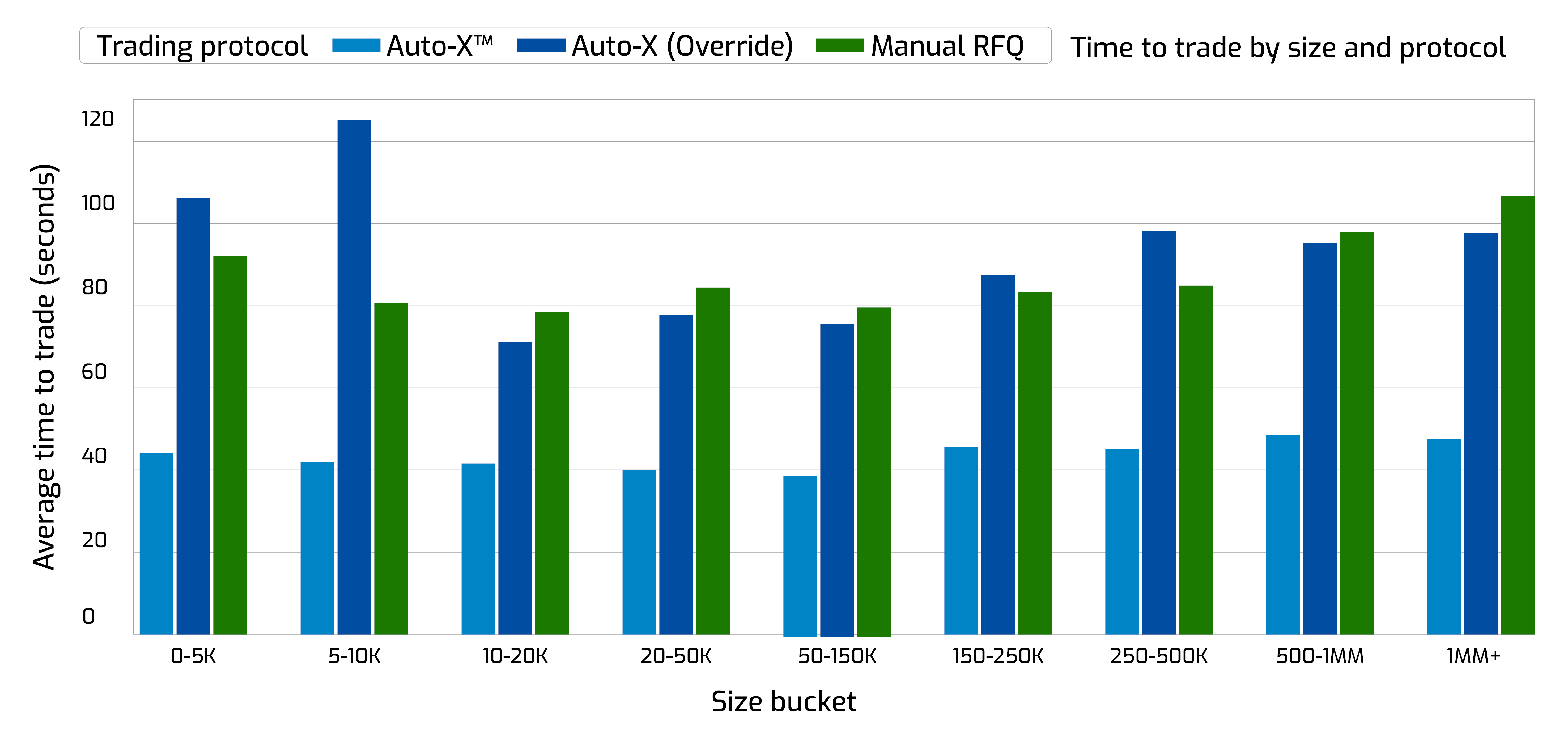
We observe faster execution with fully automated orders, with an average trade time of 40 seconds—aligning with users' minimum wait time settings. In contrast, Auto-X inquiries with manual overrides and manual RFQs take longer to execute.
TCA outcomes
In terms of execution costs, orders below 150K have average TCA within 1 cent of CP+ side. The figure below illustrates how TCA changes with order size. TCA outcomes tend to worsen as order size gets larger after 150K.
CP+ is MarketAxess’ proprietary AI-powered pricing engine for corporate bonds. It produces an unbiased, two-sided market for more than 33,000 instruments globally. Updated every 15 to 60 seconds, the engine generates nearly 30 million levels per day covering 90-95% of trading activity in its markets.
Relative Liquidity Score (RLS) provides a defined measurement of the current liquidity for individual bonds and highlights the potential ease that a trader can expect to transact in that instrument. It covers nearly 36,000 bonds daily, with scores ranging from 10 - the highest level of liquidity - down to 1.
Transaction Cost Analysis (TCA) is defined relative to CP+ and is computed as the difference between the trade price and the CP+ price on the corresponding side, at inquiry time. A positive value means the trade occurred inside (more competitive than) CP+ bid or offer, while a negative value means the trade occurred outside (less competitive than) the CP+ bid or offer.