
How automation is reshaping private bank trading in Asia
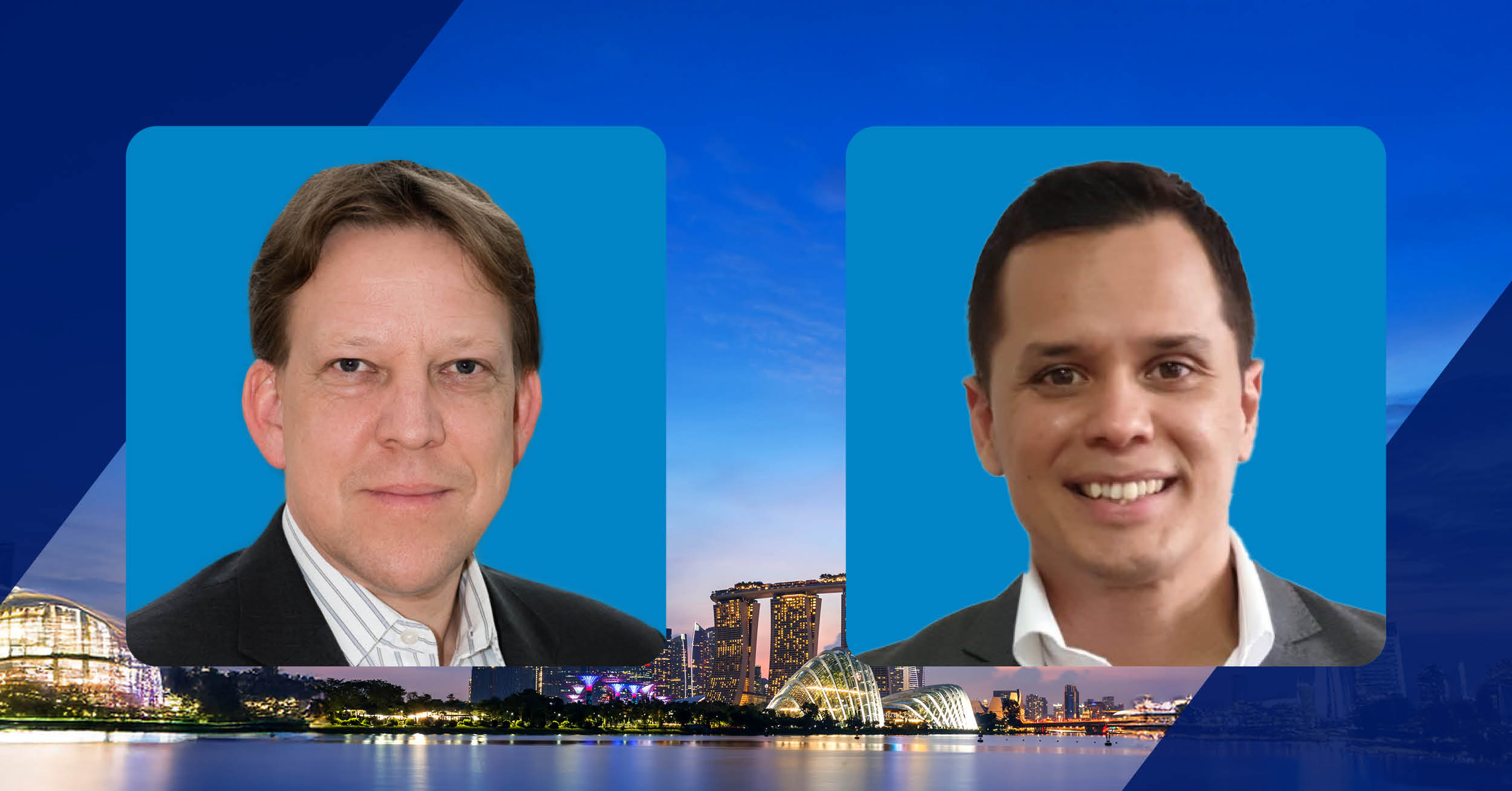
By Erik Tham, Andre Cherbonnier | 24 August 2026
Text
The momentum for private banks’ shift from manual, voice-based workflows to electronic, data-driven execution is gathering pace. In FY2025, APAC private banking volumes on the MarketAxess platform rose 76% and trade count climbed 93%, nearly double that of 2024, while 86% of private bank trades were automated, reflecting a shift for a region where desks not long ago ran predominantly on voice and chat. One key driver for that is the need for greater efficiency to generate alpha in a complex market environment of tighter regulations and cost constraints.
Against this backdrop, MarketAxess hosted a Private Banking Lunch & Learn in Singapore for representatives from leading APAC private banks to take stock of how that shift is playing out and where it needs to go. This piece distils the themes that resonated most with the traders in attendance, including the forces reshaping wealth management in the region, the depth of liquidity and data now available during Asian trading hours, and how the best-performing desks are combining automation, data and human expertise to do more for clients.
Macro tailwinds reshaping wealth management industry
Three structural forces are reshaping the APAC wealth management landscape, with each having a direct impact on the fixed income execution desk. First, a new generation of digital-first clients expects real-time interaction across every channel, making reliable, end-to-end data central to the desk while being able to support a consistent client experience from investment decision through to trade execution.
Second, AI has moved from novelty to structural force, augmenting rather than replacing human judgment and turning automation into a competitive edge that lets a desk handle more orders without adding headcount.
Third, as banks extend from UHNW and HNW into affluent and retail audiences, they must scale without sacrificing service, therefore putting a premium on efficiency, electronification, and front-to-back straight-through processing, which automates transactions electronically with no manual intervention, streamlining the process and reducing errors.
|
“When I started out at MarketAxess in 2018, the average ticket size from private banks on our platform was around US$350,000; today we see far more odd- and micro lots and the average ticket size has more than halved while total volumes from private banks continue to grow. As technology matures and banks cater to new segments of investors, the number of orders and trades is increasing significantly and the average trade sizes are becoming smaller, a clear sign that retail flow is moving into a space once reserved for HNW or UHNW clients, and that makes automation absolutely essential rather than optional.”
Erik Tham |
Together, these trends reflect the growing demand for an end-to-end electronic value chain, from the RM’s device through order management and trading to post-trade settlement.
The growth story: APAC private banking momentum
As the region’s wealth ecosystem matures, the pressure on private banks to trade fixed income more efficiently only intensifies, and their confidence in doing so electronically is growing. Average block sizes on the platform have risen materially, with desks moving beyond small robo flow to entrust electronic execution with larger, higher-conviction trades, while trading volumes on Axess IQ among APAC private banks grew 30% over the year.
|
“For a liquid trade under a million dollars, there often isn’t a person on the other side anymore as the pricing is now done through an algorithm. What is just as striking is that private banks in Asia are no longer confined to small, automated flows. Today, we are increasingly seeing them put some of the larger tickets on the platform which is a clear sign that private banks are embracing electronification at an accelerating pace.”
Andre Cherbonnier, |
Empowering private banks and traders with depth, liquidity and trusted data
As more private banks adopt electronic trading, MarketAxess provides desks and relationship managers access to deep liquidity and reliable data during Asian trading hours. Within the platform, desks can reach around 30 active liquidity providers in US investment grade and 27 in Asia credit; for liquid trades under US$1 million, pricing from seven banks in US IG and eight in Asia credit is fully automated, so a price often comes back instantly with no need for manual intervention.
The bigger shift is in how trades get matched. Through Open Trading — MarketAxess’s all-to-all marketplace, built into Axess IQ — investors and dealers have the option to trade anonymously rather than relying solely on their usual dealer relationships, opening up more counterparties, tighter pricing, and real cost savings. Today, Open Trading accounts for around 20% of activity in most products on the platform, with measurable savings of more than 20 cents on US high yield and emerging market credit across time zones.
How the best desks operate and the tools behind it
What sets the highest-performing private bank desks apart is how completely they weave data, automation, and people into one workflow. Transparent pricing sits at the core, where CP+, MarketAxess's award-winning AI-powered pricing engine, prices 80% more bonds than public sources alone and is now embedded in core systems and RM- and robo-advisory tools, sharply cutting calls to the desk and freeing traders for higher-value work. Routine tickets are largely automated, with dealer selection driven by data and trade size, while high, low and zero-touch workflows sit side by side on one screen, so trades pass seamlessly from automated to hands-on.
Orders are captured electronically from the RM via their OMS or Axess IQ Connect, checked against limits in real time, and run straight through to execution and post-trade processing. The payoff reaches the end client, and for retail and affluent investors, buying a bond increasingly resembles trading a stock, with near-executable prices on screen, limit orders and automated processing behind the scenes.
Two MarketAxess tools sit at the heart of this. Axess IQ is the desk's one-stop execution and order-workflow platform, bringing order management, liquidity, data, limit monitoring and automation onto a single screen across the full spectrum from high-touch to zero-touch. Its built-in Smart Dealer Select feature draws on proprietary, real-time trade data to guide dealer selection on more delicate inquiries, helping create trading opportunities and minimise information leakage. The platform's strengths were recognised again this year, when Axess IQ was named Asian Private Banker's 'Best Trading and Execution Solution' for the sixth consecutive year.
Axess IQ Connect extends the same data to relationship managers: a device-agnostic web app with live CP+ pricing, watch lists, desk-to-RM alerts and one-click order submission, wherever the RM is sitting with a client. Because it plugs into existing systems, there is no rip-and-replace, and the link between RMs and the trading desk tightens as a result.
Erik added, “If people asked me ten years ago whether automation in fixed income could get past 20 or 30%, I would have said no. Last year, 86% of APAC private bank trades on our platform were automated, a figure I’m genuinely proud of, and one that shows how far the region has come.”
Automation is here to stay
As AI, automation and data become embedded in workflows, the question is no longer whether to electronify, but how quickly and how well. Private banks require a platform that embodies this shift, one that pairs deep liquidity, trusted data, and a tailored execution toolkit with the human expertise to put them to work. MarketAxess is here to deliver exactly that.
The payoff is ultimately human: by handling the routine, the right infrastructure frees people to focus on the strategy and client relationships that technology alone cannot replace.