
AxessPoint: AI infrastructure boom reshapes hyperscaler bond liquidity

Highlights
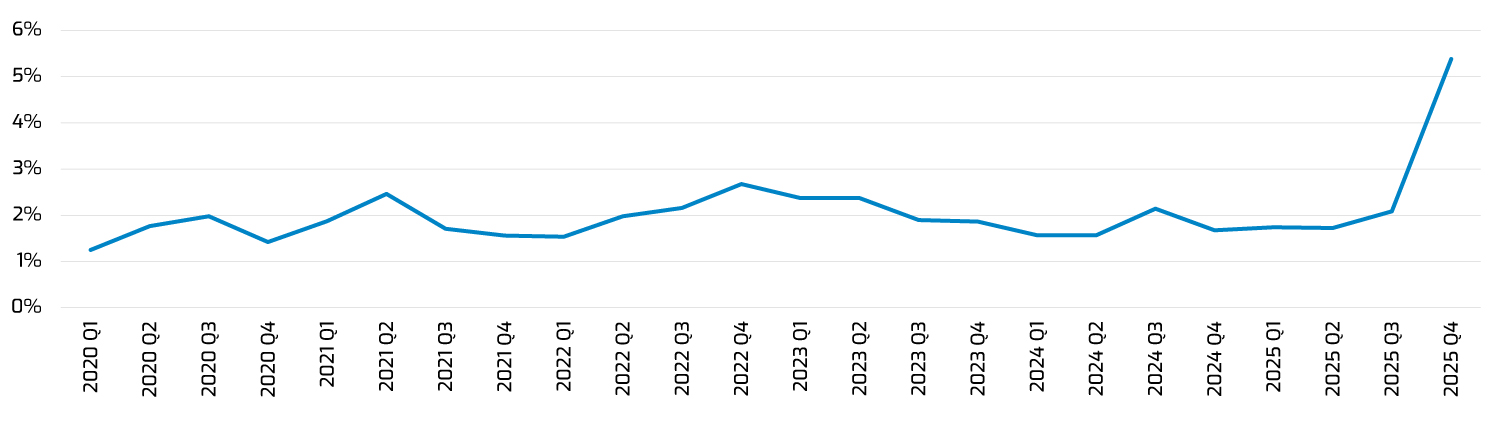
The AI-driven supply shock: Surging demand for AI infrastructure has driven a massive spike in hyperscaler bond issuance, pushing their TRACE volume share to 5.4% in Q4 2025.
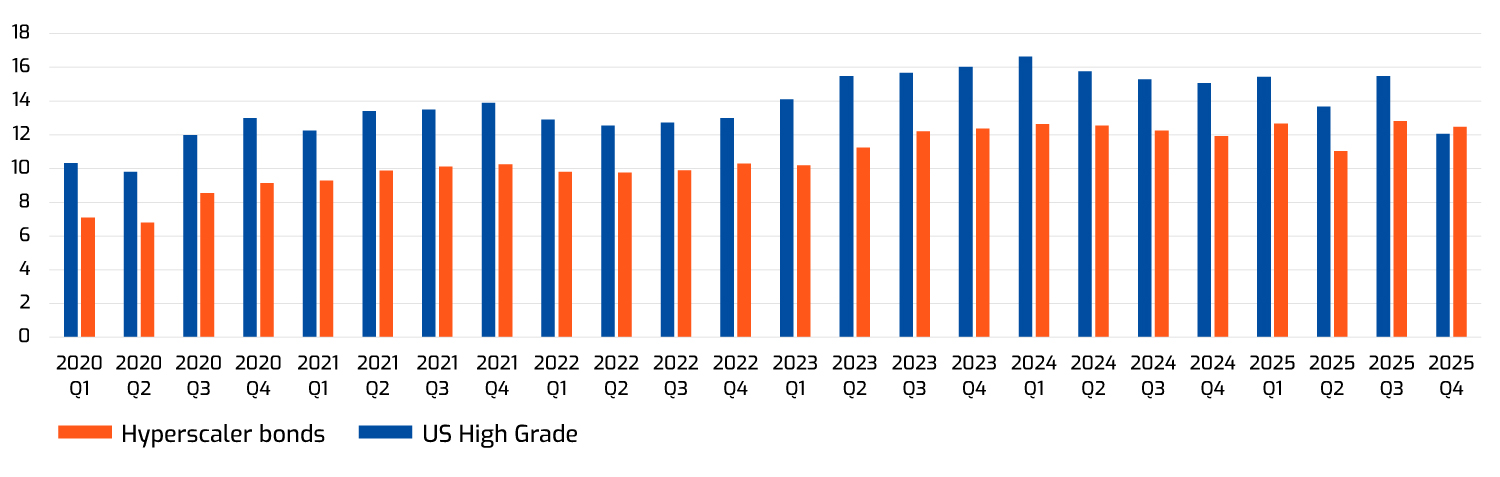
Liquidity recalibration: The massive influx of supply has caused more dealer caution, bringing hyperscaler liquidity metrics down in line with the broader US High Grade market. Despite this recalibration, the "AI trade" remains highly executable with dealers actively facilitating the sector’s increased volume.
As the race for AI dominance accelerates, hyperscalers, large-scale cloud providers like AWS, Azure, and Google Cloud that operate vast global data center networks, are deploying capital at unprecedented rates to fund data center construction. This has triggered a surge in bond issuance that is reshaping liquidity dynamics. While the influx of new paper has spurred secondary trading activity, it has simultaneously led dealers to adopt a more selective posture.
The AI-driven supply shock
The most immediate impact of the datacenter boom is visible in trading volumes. For the majority of the 2020–2024 period, hyperscaler bonds (AMZN, GOOGL, META, MSFT, ORCL),maintained a relatively steady presence in the secondary market, accounting for approximately 1.5% to 2.5% of TRACE volume share.
However, 2025 Q4 marked a dramatic departure from historical norms. Volume share of the hyperscaler tickers spiked vertically to 5.4%, reflecting the market’s absorption of massive new capital raises. This rivals the activity of the broader market's top issuers, as the top 5 non-hyperscaler tickers on TRACE captured only a slightly higher 7.4% share. This supply shock has forced a recalibration by trading desks, which must now manage significantly higher inventories from a concentrated sector.
Hyperscaler bonds volume share of TRACE
Liquidity recalibration
Historically, hyperscaler debt has been a "darling" of the US High Grade market, consistently garnering higher dealer engagement than the broader universe. On MKTX, hyperscaler bonds frequently received 14 to 16 responses per inquiry throughout 2023 and 2024—well above the US High Grade average.
By late 2025, however, this superior market depth began to compress. In 2025 Q4, the average number of responses for hyperscaler bonds dropped to approximately 12, converging with the broader US High Grade market averages. This decline was broad-based across all trade size buckets, occurring alongside a 68% quarter-over-quarter surge in average inquiry size to $514k —a combination that pressured response count further. This contraction signals that dealers are becoming more selective in their engagement as they digest the increased volume.
Average number of responses per inquiry
Conclusion
The data paints a clear picture of a market in transition. The "AI trade" in credit is no longer just a narrative; it is a volume event. While the market remains functional, the era of effortless liquidity for hyperscalers appears to be moderating. Dealers are signaling that while they are willing to facilitate the new wave of issuance, they are doing so with greater selectivity.